
 Pin this recipe
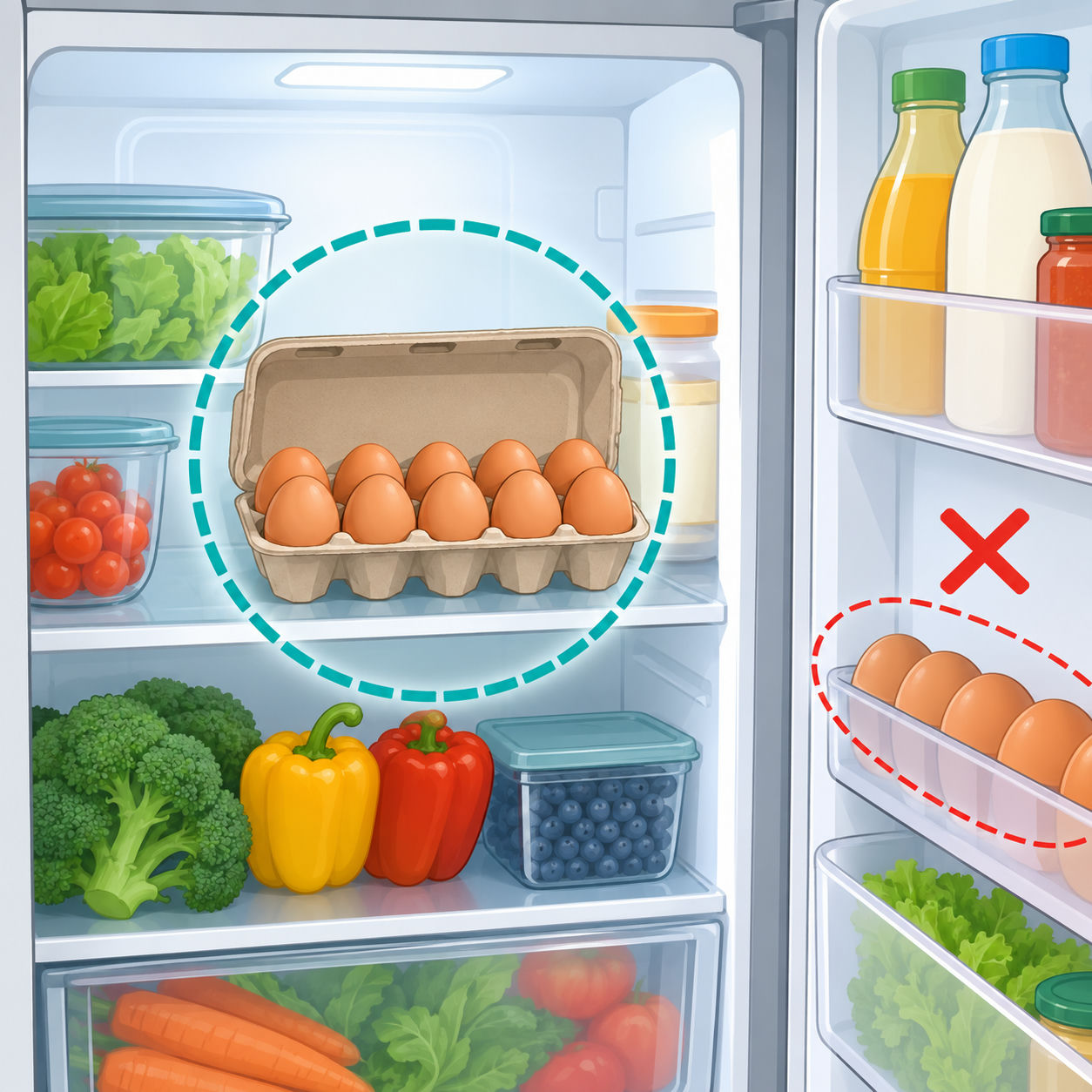
Egg storage is simple, but two common habits shorten freshness: moving eggs to the refrigerator door and setting them pointy end up. For store-bought eggs in the United States, the safest everyday method is to keep them cold, protected in their original carton, and positioned pointy end down. This guide explains how to store eggs for freshness and food safety.
Buy refrigerated, clean, uncracked eggs
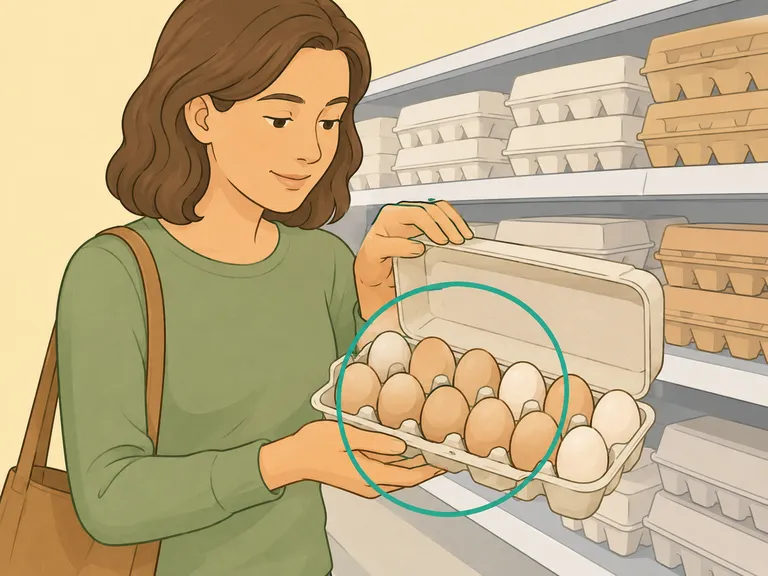
Start with eggs that were sold from a refrigerated case and check that the shells are clean and not cracked. The FDA recommends buying only refrigerated eggs and inspecting the carton before you leave the store because cracks and dirt can raise contamination risk.
Keep eggs in their original carton
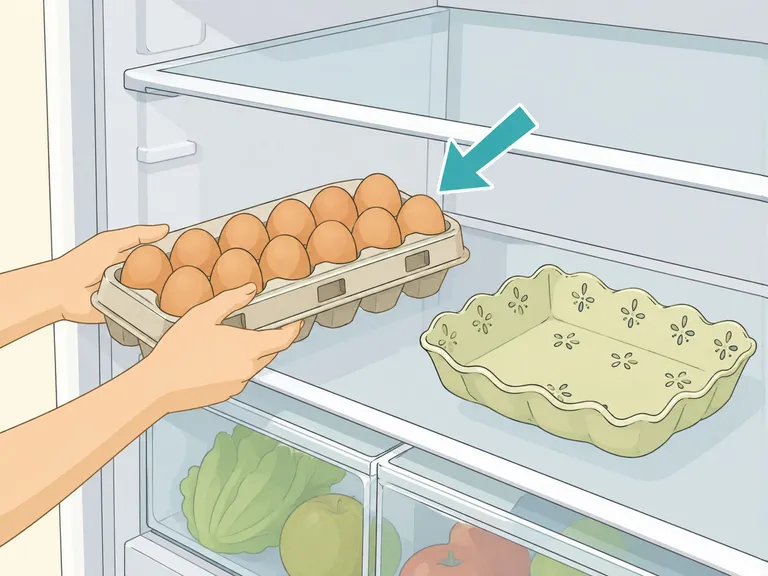
Leave eggs in the carton they came in instead of transferring them to the plastic tray in the fridge door. The FDA advises storing eggs in their original carton, and the carton also keeps the pack or best-quality date with the eggs.
Place the carton on an interior refrigerator shelf
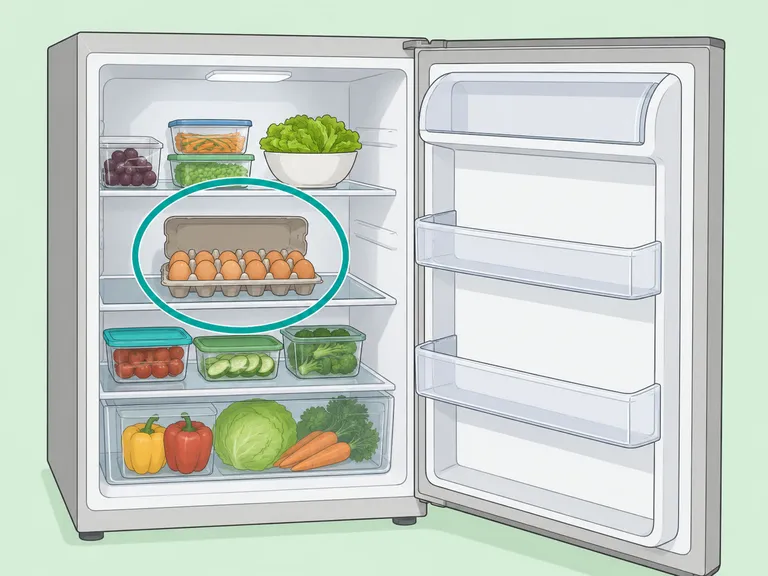
Put the carton on a middle or lower interior shelf, ideally toward the back, rather than in the door. The refrigerator door is warmer and changes temperature more often, while interior shelves keep eggs closer to the steady cold zone recommended for egg storage.
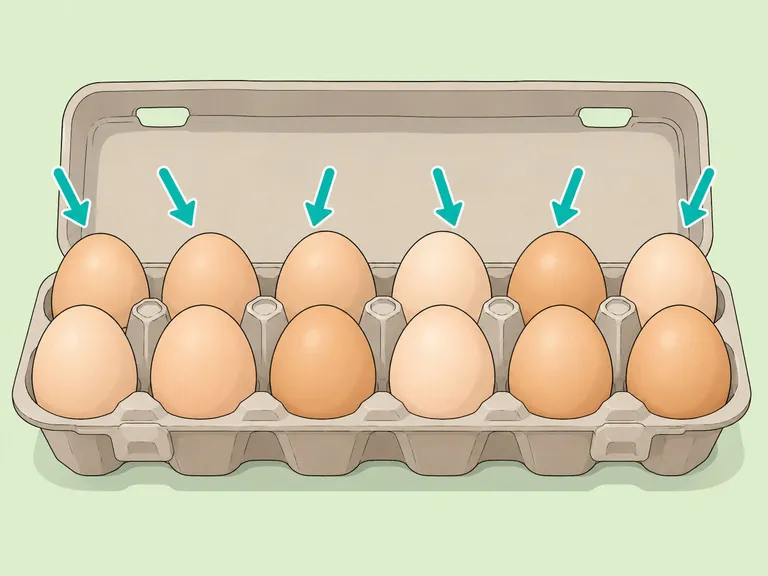
Store eggs pointy end down
Keep each egg with the pointed end down and the wider rounded end up. Food experts explain that the wider end contains the air cell, and storing eggs this way helps keep that air cell stable and the yolk centered longer, according to Simply Recipes' egg-storage guidance.
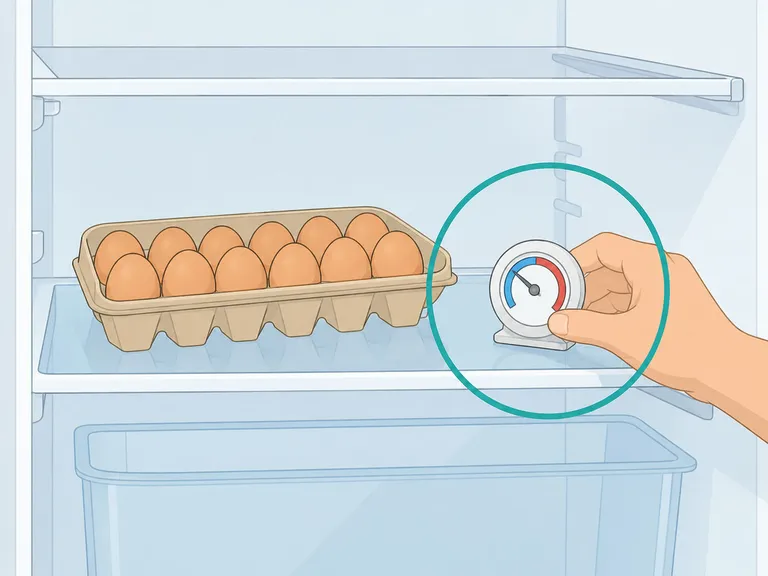
Keep the refrigerator at 40°F or below
Use a refrigerator thermometer and keep the appliance at 40°F (4°C) or below. The FDA's egg safety guidance says prompt refrigeration at this temperature helps protect both egg quality and safety.
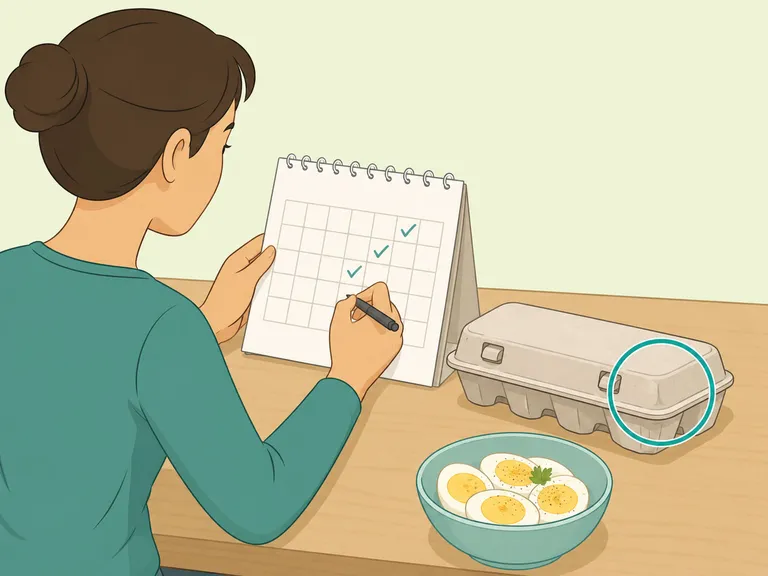
Use refrigerated eggs within the recommended time
Plan to use raw shell eggs within 3 to 5 weeks in the refrigerator, and use hard-cooked eggs within 1 week. Those time frames come from the FoodSafety.gov cold food storage chart, which also says not to freeze raw eggs in their shells.
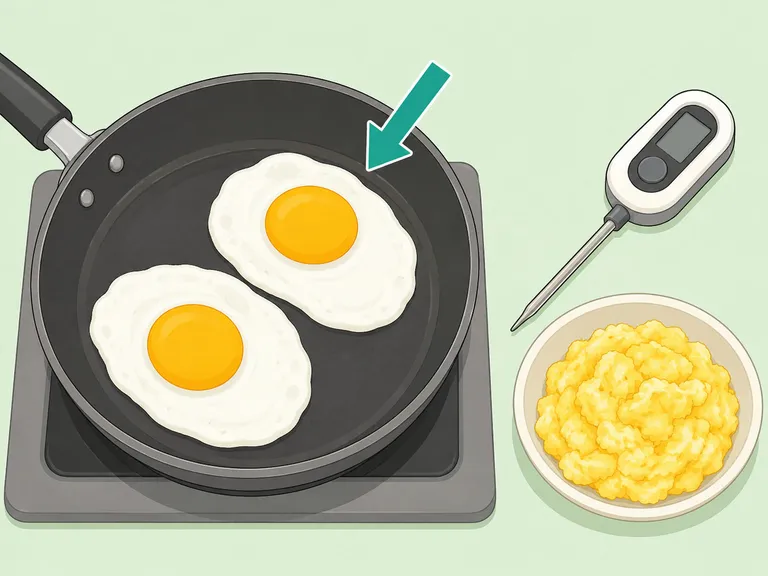
Cook eggs thoroughly before eating
Storage helps, but safe cooking still matters because eggs can carry Salmonella. Cook raw eggs until the yolk and white are firm, and cook egg dishes such as quiche or frittata to 160°F (71°C), as listed in the FoodSafety.gov safe temperature chart.
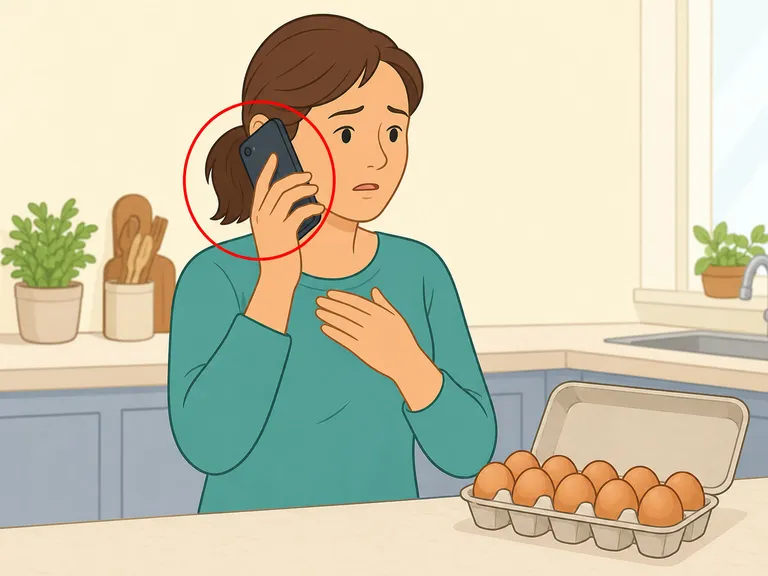
Seek medical help for serious food-poisoning symptoms
Contact a doctor if diarrhea or vomiting lasts more than 2 days, there is bloody stool or urine, fever is higher than 102°F, or signs of dehydration appear. The CDC lists these as reasons to call a doctor after possible Salmonella infection.
Article Summary
The bottom line: keep eggs in their original carton, place the carton on an interior refrigerator shelf rather than the door, and leave the eggs pointy end down. Good storage does not replace safe cooking, but it helps protect quality and reduce avoidable food-safety risks.
Frequently Asked Questions
- Should eggs be stored in the refrigerator door?
- No. The door warms and cools more often as it opens, so an interior shelf is the better place for eggs. Keep them toward the middle or back of the refrigerator where the temperature is steadier.
- Which way should eggs face in the carton?
- Store eggs pointy end down and rounded end up. That position keeps the air cell at the wider end on top and helps maintain egg quality during storage.
- Should I take eggs out of the original carton?
- It is better to leave eggs in the carton. The carton protects the shells, keeps the date information with the eggs, and helps reduce odor absorption in the refrigerator.
- How cold should the refrigerator be for eggs?
- Keep eggs in a refrigerator at 40°F (4°C) or below. Use a refrigerator thermometer if you are not sure your fridge is cold enough.
- How long do raw eggs last in the refrigerator?
- FoodSafety.gov lists raw shell eggs at 3 to 5 weeks in the refrigerator. For best quality, the FDA recommends using eggs within 3 weeks after purchase.
- Can I freeze eggs in the shell?
- No. Do not freeze raw eggs in their shells. If you need to freeze eggs, beat the yolks and whites together first, then freeze them in a freezer-safe container.
References
Trusted culinary resources helped guide and refine this article.
- https://www.fda.gov/food/buy-store-serve-safe-food/what-you-need-know-about-egg-safety
- https://www.foodsafety.gov/food-safety-charts/cold-food-storage-charts
- https://www.foodsafety.gov/food-safety-charts/safe-minimum-internal-temperatures
- https://www.cdc.gov/salmonella/about/index.html
- https://www.cdc.gov/salmonella/signs-symptoms/index.html
- https://www.goodhousekeeping.com/food-recipes/cooking/a71800209/how-to-store-eggs
- https://www.simplyrecipes.com/never-store-eggs-like-this-experts-11973670