
 Pin this recipe
A cheerful family photo can look ordinary at first glance, but small details sometimes reveal a visual puzzle, an editing mistake, or missing context. This guide shows you how to inspect an image carefully without jumping to conclusions. You will learn how to observe the photo, compare clues, and verify the image before sharing it.
Pause before accepting the caption
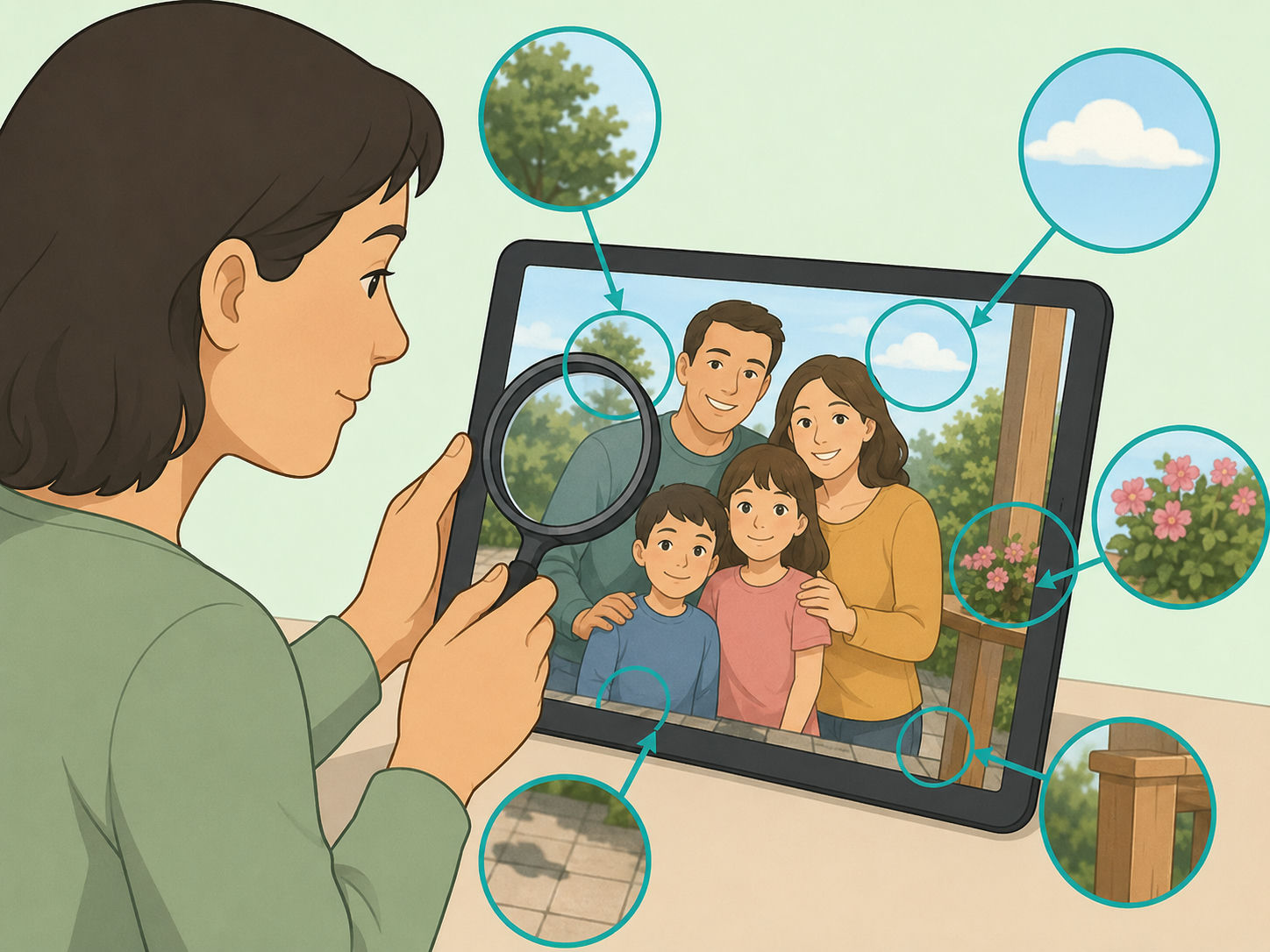
Clickbait captions often tell you what to feel before you have actually inspected the image. Start by separating the picture from the claim and asking what you can see for yourself. The Library of Congress primary source guide recommends observing, reflecting, questioning, and investigating instead of rushing to an answer.
Scan the whole image in sections
Divide the photo into a simple grid: top left, top right, center, bottom left, and bottom right. Look at each section slowly instead of staring only at the faces. The Library of Congress photograph analysis guide suggests identifying people, objects, arrangement, setting, words, and other visible details.
Check the people for mismatched details
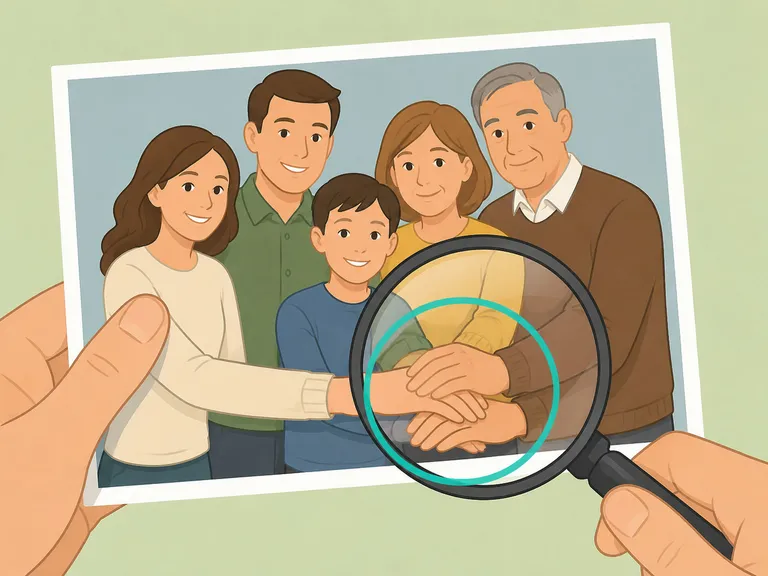
Look at hands, feet, shoulders, hairlines, jewelry, glasses, and clothing edges. In a family photo, unusual details may include an extra hand, a missing limb hidden by perspective, or a sleeve that does not match the person it appears to belong to. Do not assume an edit from one odd detail, since posture, blur, and overlap can make normal photos look strange.
Compare shadows, light, and reflections
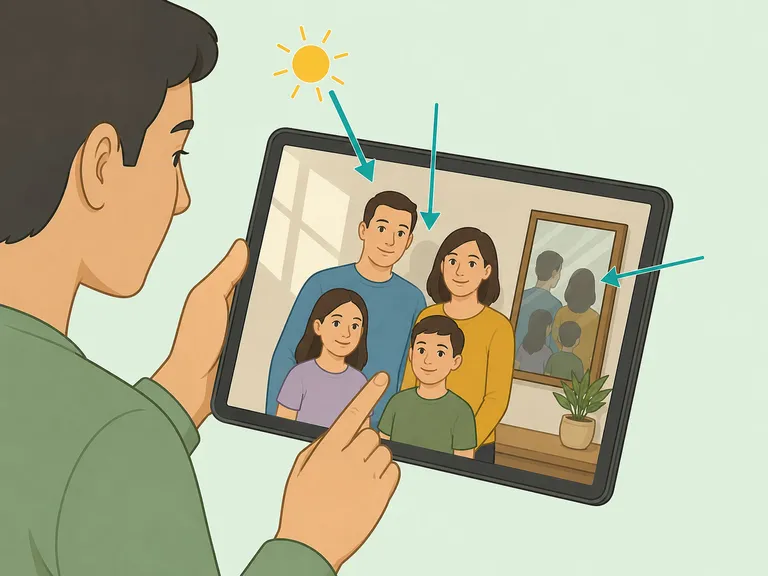
Notice where the light appears to come from and whether shadows fall in a consistent direction. Check mirrors, windows, picture frames, phone screens, and shiny furniture for reflections that reveal something outside the main pose. A mismatch can be a clue, but it can also come from multiple light sources or a tricky angle.
Inspect the background and edges
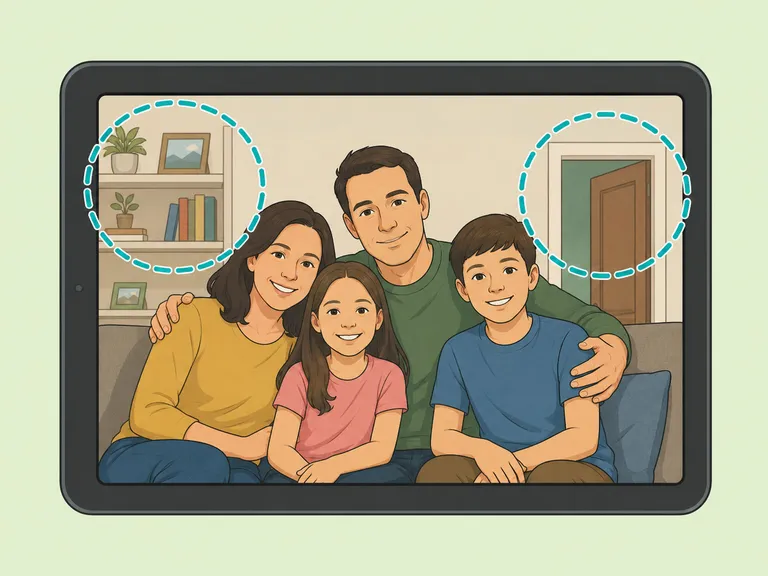
Move your eyes away from the happy faces and look at doorways, shelves, wall art, pets, toys, furniture legs, and the edges of the frame. Hidden puzzle details are often placed in the background because most viewers focus on people first. Also check whether objects are cut off in a way that changes what the scene appears to show.
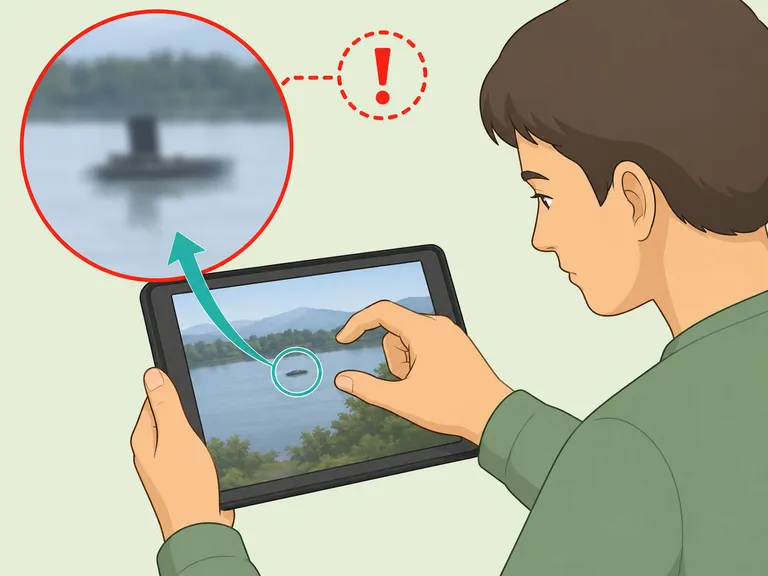
Zoom in without overinterpreting blur
Zoom in enough to see details, but remember that compression, low resolution, and phone motion can create odd textures. A blurry face in the background or a warped-looking object is not proof that an image is fake. Research on image-forensic labels notes that ordinary viewers can have difficulty judging manipulated images from appearance alone, so visual clues need context from reliable checks such as image credibility research.
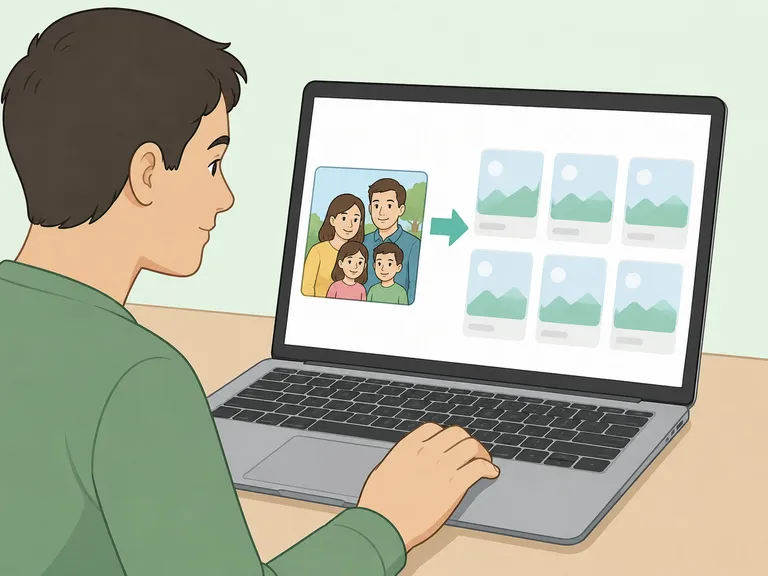
Use reverse image search for context
If the photo is online, search with the image instead of only searching the caption. Google explains that visual search results may show similar images, related websites, and pages containing the same or similar image through Google Lens image search. Compare where the image appeared earlier, whether it had a different caption, and whether a reliable source explains it.

Look for independent confirmation
Do not rely on one search result, one social post, or one comment thread. A recent study of reverse image search found that results can include irrelevant pages and repeated misinformation, so treat search as a starting point rather than a final answer. Use the findings from reverse image search research as a reminder to compare several sources before deciding what the image shows.
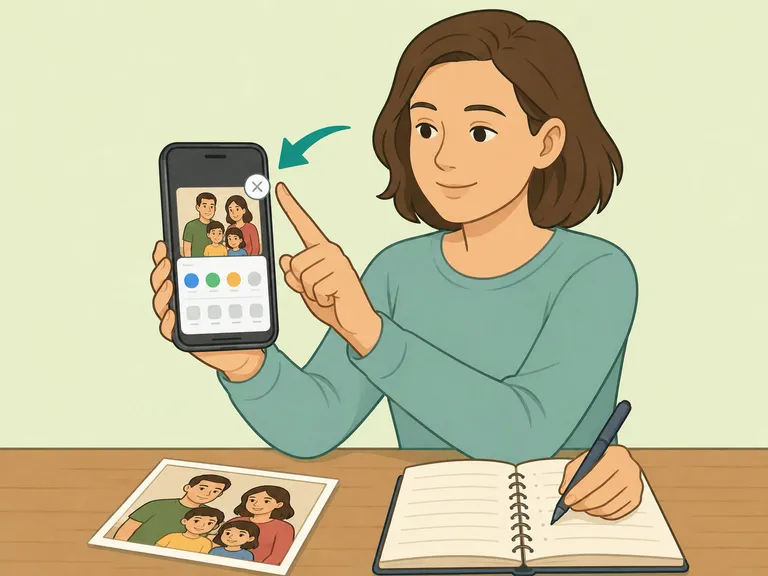
Decide what you can honestly conclude
After checking the photo, state only what the evidence supports: “this object looks unusual,” “the caption may be wrong,” or “I found an earlier version with different context.” Avoid turning a visual clue into a personal accusation, especially when the photo shows private people or children. If you cannot verify the source, it is better not to share the image as fact.
Article Summary
The bottom line: look slowly, divide the image into sections, compare repeated details, and verify the source before treating any unusual detail as proof. Good observation is careful, patient, and backed by context.
Frequently Asked Questions
- What should I look at first in a family photo puzzle?
- Start with the obvious subjects, then move outward to the background, floor, reflections, and edges. The unusual detail is often away from the main smiles or pose.
- Do strange hands or fingers always mean a photo is AI-generated?
- No. Odd-looking hands can come from motion blur, cropping, shadows, or normal perspective. Treat them as a reason to look closer, not as proof by themselves.
- How can I check if a family photo was reused with a false caption?
- Use reverse image search or Google Lens to look for other pages where the image or similar images appear. Compare dates, captions, and the original context before sharing.
- Why do reflections help reveal unusual details?
- Mirrors, windows, shiny tables, and picture frames can show objects or people from another angle. If a reflection conflicts with the main scene, it may point to an edit, a hidden person, or simply a confusing perspective.
- Can photo editing tools always prove whether an image is fake?
- No. Research on visual misinformation shows that people and tools can struggle with manipulated images, so it is better to combine visual clues with source checks and reliable context.
- Should I share a photo if I think I found something strange?
- Pause first. If the image involves real people, children, or a sensitive claim, verify the source and avoid accusing anyone based on a single visual clue.
References
Trusted culinary resources helped guide and refine this article.
- https://www.loc.gov/programs/teachers/getting-started-with-primary-sources/guides
- https://www.loc.gov/static/programs/teachers/getting-started-with-primary-sources/documents/Analyzing_Photographs_and_Prints.pdf
- https://support.google.com/websearch/answer/1325808?hl=en
- https://arxiv.org/abs/2101.07951
- https://arxiv.org/abs/2603.09130