
 Pin this recipe
Plantar fasciitis can cause pain around the heel and arch, especially with the first steps after rest. Gentle stretching and strengthening exercises may help reduce tension on the plantar fascia when done consistently and safely. This guide shows six easy exercises, plus safety steps and when to get professional care.
Warm up and check your pain first
Before stretching, warm up with 5 to 10 minutes of easy low-impact movement, such as gentle walking or riding a stationary bike, as recommended in the AAOS foot and ankle conditioning program. Exercises should feel like a mild stretch or effort, not sharp pain. Stop and rest if your heel or arch pain increases during the movement.
Stretch your plantar fascia before standing
Sit down, cross the painful foot over your opposite knee, and gently pull your toes back toward your shin until you feel a stretch along the arch. The American Academy of Orthopaedic Surgeons notes that this stretch is often done in the morning before walking. Hold it briefly, relax, and repeat without forcing the toes.
Roll your arch with a ball or frozen bottle
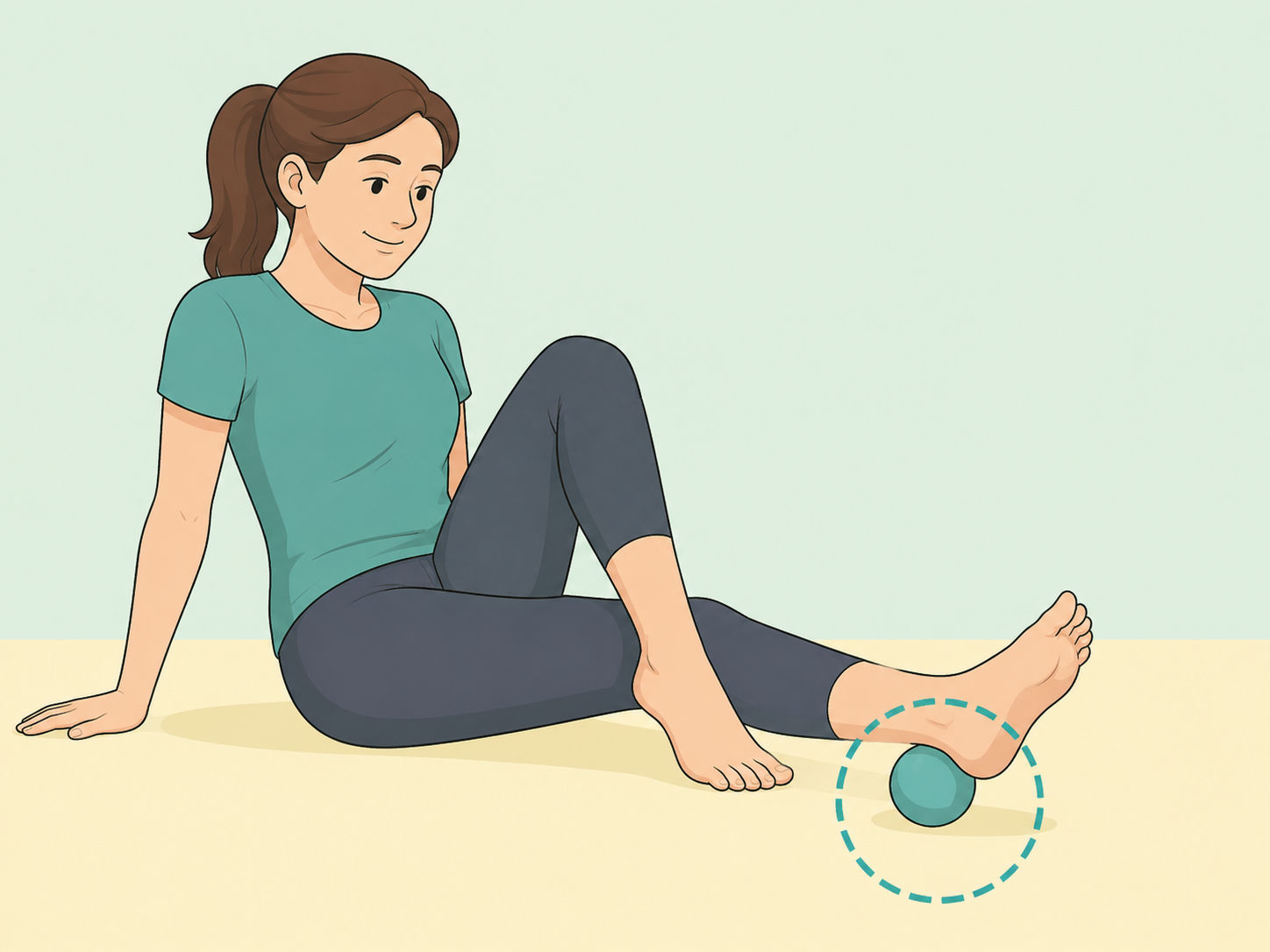
Sit in a stable chair and place a tennis ball, golf ball, or towel-wrapped frozen water bottle under the arch of the sore foot. Roll from the heel toward the ball of the foot with light pressure for a few minutes. Cleveland Clinic describes rolling massage and icing as common at-home options for plantar fasciitis symptom relief.

Do a straight-knee calf stretch at the wall
Stand facing a wall with the sore leg behind you, heel flat, toes pointing forward, and back knee straight. Lean your hips toward the wall until you feel a stretch in the upper calf and heel area. Tight calf muscles can add tension through the Achilles tendon and plantar fascia, so calf and Achilles stretching is commonly recommended.

Add a bent-knee calf stretch
Stay facing the wall, but bend the back knee slightly while keeping the heel down. This shifts the stretch lower in the calf and around the Achilles area. Keep the movement controlled and avoid bouncing, because the goal is gentle lengthening rather than forcing range of motion.

Use a towel stretch while seated
Sit with your leg extended and loop a towel around the ball of your foot. Pull the towel toward you until you feel a stretch through the calf and heel, then ease off. A towel can help you stretch without standing on a painful foot, and the NHS recommends regular gentle exercises for the sole and heel.
Strengthen your toes with towel curls
Sit with both feet flat and place a small towel on the floor under the sore foot. Curl your toes to pull the towel toward you, then relax and repeat slowly. This type of exercise works small foot muscles, and the AAOS program includes towel curls for foot and ankle conditioning.
See a healthcare provider if symptoms persist
Get medical advice if your pain is severe, keeps getting worse, returns often, or has not improved after self-care. The NHS advises seeing a GP for persistent foot pain, tingling, loss of feeling, or foot pain with diabetes, and Mayo Clinic notes that clinicians may check for other causes such as stress fracture when needed. Do not push through pain that changes, spreads, or stops normal activities.
Article Summary
The bottom line: start gently, focus on the calf, Achilles tendon, plantar fascia, and small foot muscles, and use supportive shoes while symptoms settle. If pain is severe, worsening, or not improving, get medical advice instead of pushing through.
Frequently Asked Questions
- Can exercises cure plantar fasciitis?
Exercises can help many people manage symptoms, but they are not a guaranteed cure. Plantar fasciitis often improves with a mix of stretching, activity changes, supportive shoes, and time.
- How often should I do plantar fasciitis exercises?
Many programs use daily gentle stretching, but the right schedule depends on your pain level and health history. Start lightly, stop if symptoms worsen, and ask a healthcare professional if you are unsure.
- Should I stretch before getting out of bed?
A seated plantar fascia stretch before standing can be helpful because morning pain is common after the foot has rested overnight. Move slowly and keep the stretch gentle.
- Is it okay to walk with plantar fasciitis?
Short, comfortable walking may be fine for some people, but long standing, running, or walking on hard surfaces can make symptoms worse. Use supportive footwear and reduce activities that flare the pain.
- What exercise should I avoid with plantar fasciitis?
Avoid exercises that sharply increase heel pain, especially high-impact moves like running, jumping, or step aerobics while symptoms are active. Choose lower-impact options such as cycling or swimming if they do not aggravate your foot.
- When should I see a doctor for plantar fasciitis?
See a healthcare provider if pain is severe, worsening, keeps returning, causes numbness or tingling, or has not improved after a short period of self-care. Get prompt advice if you have diabetes and foot pain.
References
Trusted culinary resources helped guide and refine this article.
- https://www.mayoclinic.org/diseases-conditions/plantar-fasciitis/diagnosis-treatment/drc-20354851
- https://www.nhs.uk/conditions/plantar-fasciitis
- https://my.clevelandclinic.org/health/diseases/14709-plantar-fasciitis
- https://health.clevelandclinic.org/plantar-fasciitis-stretches-exercises
- https://www.orthoinfo.org/diseases--conditions/plantar-fasciitis-and-bone-spurs
- https://www.orthoinfo.org/recovery/foot-and-ankle-conditioning-program